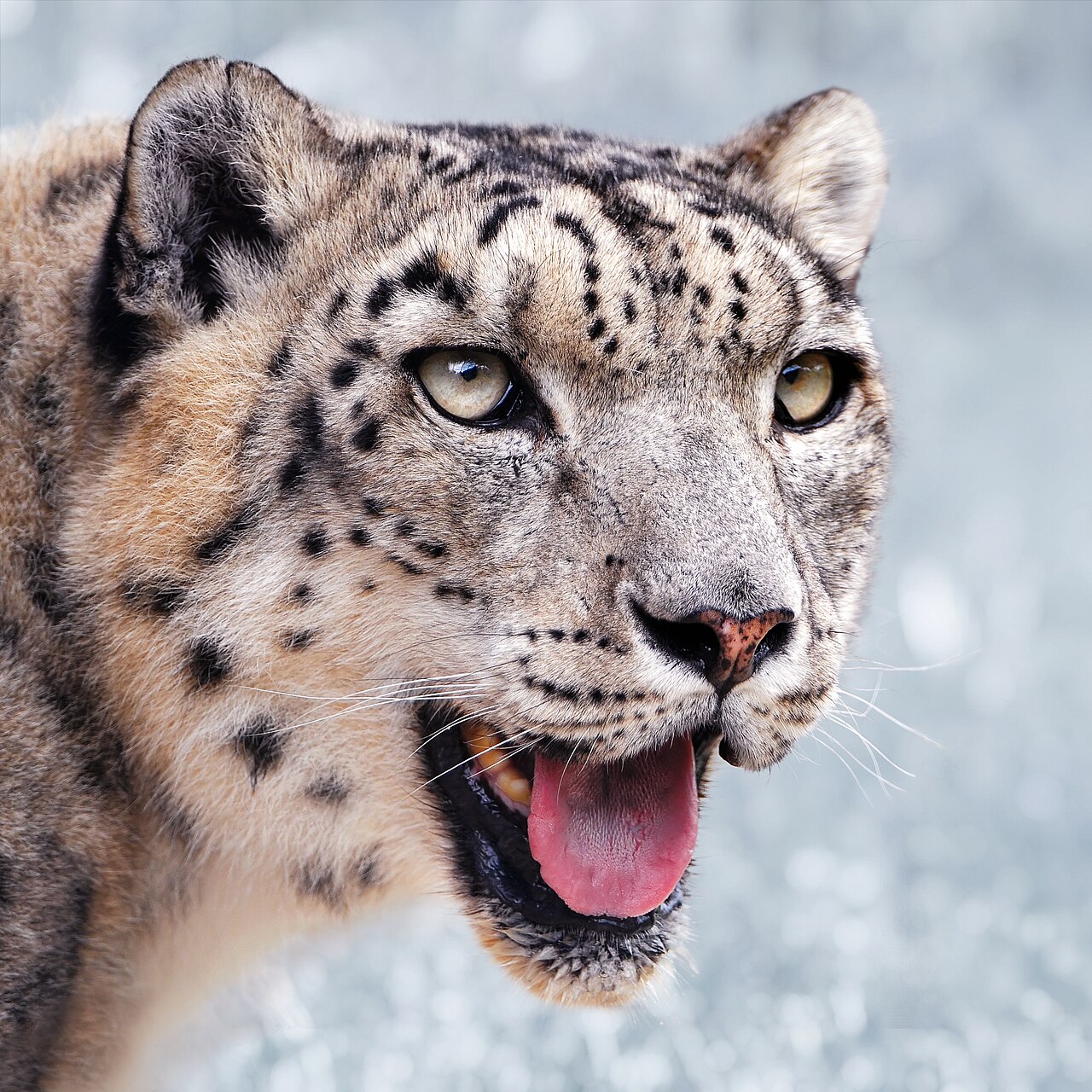

The snow leopard (Panthera uncia) is one of the most iconic and elusive large carnivores found in the Kingdom of Bhutan. Inhabiting the alpine and subalpine zones of the northern districts at elevations between 3,500 and 5,500 metres, the snow leopard is a flagship species for high-altitude conservation in the eastern Himalayas. Bhutan is estimated to support a population of between 100 and 200 individuals, making it one of the more significant range countries for the species. The Royal Government of Bhutan, working with international conservation organisations, has implemented a range of programmes to protect this vulnerable predator and its habitat.[1]
The snow leopard was classified as Vulnerable on the IUCN Red List in 2017, a downlisting from its previous Endangered status, although this reclassification was debated among conservationists. Globally, the population is estimated at 4,000 to 6,500 individuals spread across 12 range countries in Central and South Asia. Bhutan's snow leopard population, while relatively small in absolute numbers, is significant because it exists within one of the best-protected landscapes in the snow leopard's range, thanks to Bhutan's extensive system of national parks and biological corridors.
Distribution and Habitat
In Bhutan, snow leopards are found primarily in the northern districts of Gasa, Laya, Lingzhi, and parts of Bumthang, Wangdue Phodrang, and Haa. The core habitat lies within Jigme Dorji National Park, Bhutan's largest protected area, which covers over 4,300 square kilometres of mountainous terrain along the border with Tibet. Additional populations are believed to exist in Sakteng Wildlife Sanctuary in the east and in the biological corridors that connect Bhutan's network of protected areas.
Snow leopards in Bhutan inhabit rugged, steep terrain characterised by rocky outcrops, cliff faces, alpine meadows, and sparse vegetation. They share their habitat with prey species including blue sheep (bharal), Himalayan tahr, musk deer, and marmots. The presence of healthy prey populations is essential for snow leopard survival, and Bhutan's relatively intact alpine ecosystems provide suitable conditions. The animals are solitary and territorial, with individual home ranges that can span 100 to 400 square kilometres depending on prey density.[2]
Camera Trap Surveys
Much of what is known about snow leopards in Bhutan comes from camera trap surveys conducted by the Department of Forests and Park Services in collaboration with international partners such as WWF Bhutan, Panthera, and the Snow Leopard Trust. The first systematic camera trap survey was conducted in Wangchuck Centennial National Park in 2014 and yielded multiple photographs of snow leopards, confirming the species' presence in areas where it had previously been only anecdotally reported.
Subsequent surveys in Jigme Dorji National Park and other northern areas have expanded the database of confirmed snow leopard presence. Camera traps have captured images of snow leopards at elevations as high as 5,200 metres, demonstrating the species' use of the highest habitable zones in Bhutan. The data collected from these surveys inform population models, help identify critical habitat corridors, and guide the placement of anti-poaching patrols.
Human-Wildlife Conflict
One of the primary challenges for snow leopard conservation in Bhutan is conflict with highland herders. The semi-nomadic yak-herding communities of northern Bhutan, particularly in Laya, Lunana, and Lingzhi, depend on livestock for their livelihoods. Snow leopards occasionally prey on yaks, horses, and other domestic animals, causing significant economic losses for individual herders. Retaliatory killing of snow leopards, while illegal, has historically been a concern in some areas.
To address this conflict, the Royal Government has established community-based livestock insurance programmes in key snow leopard areas. Under these schemes, herders pay a small premium into a communal fund, and losses from verified predator attacks are compensated. The programmes have been credited with reducing negative attitudes toward snow leopards and decreasing retaliatory killings. Additionally, the construction of predator-proof corrals has been promoted in vulnerable communities, reducing livestock losses at night when most predation occurs.[3]
Conservation Programmes
Bhutan's snow leopard conservation strategy is embedded within the broader framework of the country's environmental policy, which mandates that at least 60 percent of the country remain under forest cover in perpetuity. The national protected area system covers more than 51 percent of Bhutan's territory and includes biological corridors that connect parks and sanctuaries, allowing wildlife to move between habitats. This landscape-level approach to conservation is particularly important for wide-ranging species like the snow leopard.
Bhutan is a member of the Global Snow Leopard and Ecosystem Protection Program (GSLEP), an international initiative launched in 2013 that brings together all 12 range countries to secure at least 20 snow leopard landscapes by 2020. Within this framework, Bhutan has identified priority landscapes, strengthened anti-poaching enforcement, and invested in community engagement. The country also participates in the Snow Leopard Trust's long-term monitoring programmes, contributing data to the global understanding of the species' ecology and conservation needs.[1]
Ecological Role
As an apex predator, the snow leopard plays a crucial role in maintaining the ecological balance of Bhutan's alpine ecosystems. By regulating populations of herbivores such as blue sheep and musk deer, snow leopards help prevent overgrazing of alpine meadows, which in turn supports soil stability and water retention in these fragile environments. The health of these high-altitude ecosystems has downstream effects on water supply for communities throughout Bhutan, as glacial melt and alpine streams feed the major river systems that sustain agriculture and hydropower generation in the lowlands.
The snow leopard is also an important indicator species for the broader health of the alpine environment. Monitoring snow leopard populations provides insights into the status of their prey species, vegetation conditions, and the impacts of climate change on high-altitude ecosystems. As temperatures rise and snowlines retreat, the long-term viability of snow leopard habitat in Bhutan is a subject of ongoing research and concern.[2]
References
- Snow Leopard Trust. "Snow Leopard Conservation." https://www.snowleopard.org/
- Forrest, J.L. et al. (2012). "Conservation and climate change: Assessing the vulnerability of snow leopard habitat to treeline shift in the Himalaya." Biological Conservation. https://doi.org/10.1016/j.biocon.2013.12.033
- WWF Bhutan. "Wildlife Conservation in Bhutan." https://www.wwfbhutan.org.bt/
Related articles
Know something about this topic? Edit this article or . Anonymous contributions welcome — no account required.