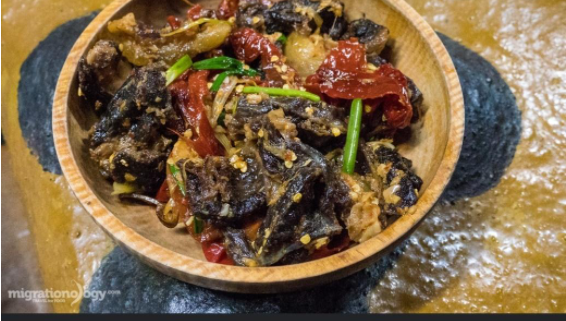

Shakam paa (Dzongkha: ཤ་ཀམ་པ་; also romanised as shakam pa) is a traditional Bhutanese dish centred on dried beef (shakam) cooked with dried red chili peppers and, typically, sliced radish or other vegetables. The word shakam literally means "dried meat" — sha for meat and kam for dried — and the preparation has its origins in the ancient necessity of preserving protein for consumption during the long Himalayan winters when fresh meat was scarce. Today, shakam paa remains one of Bhutan's most cherished dishes, prized for its concentrated, savoury flavour and chewy texture.[1]
The dish belongs to the broader family of Bhutanese meat preparations that includes phaksha paa (pork with chilies) and sikam paa (dried pork with chilies). What distinguishes shakam paa is the distinctive flavour of air-dried and smoked beef, which develops a depth and intensity far beyond that of fresh meat. The drying process concentrates the beef's umami qualities, producing a taste that Bhutanese food writers often describe as essential to the country's culinary identity.[2]
Shakam paa is served throughout the year across all regions of Bhutan, though it is particularly associated with the higher-altitude communities of the central and western dzongkhags where cattle farming and meat drying traditions are strongest. Like most Bhutanese dishes, it is eaten with red rice and frequently accompanied by ema datshi, forming a meal of remarkable flavour complexity from simple, local ingredients.[3]
History
The practice of drying meat in Bhutan dates back centuries and is a direct response to the country's geography and climate. In the steep valleys and high passes of the Himalayas, refrigeration was impossible and the supply of fresh meat was seasonal, tied to the annual slaughter cycle in late autumn. Families preserved beef, pork, and yak meat by slicing it into strips and hanging it to dry in the open air, often over wood-burning hearths where the smoke imparted an additional layer of flavour and helped inhibit bacterial growth.[2]
This technique of meat preservation is shared across the Himalayan region, with analogous traditions found in Tibet, Nepal, and the high-altitude communities of northeastern India. In Bhutan, the dried-meat tradition became so central to the food culture that shakam — whether beef, pork, or yak — is considered a pantry essential in traditional households. The cooking of shakam with chilies and vegetables into a stewed dish evolved as a practical method of rehydrating and tenderising the dried strips while infusing them with flavour.[4]
Ingredients
The primary ingredient of shakam paa is dried beef, which has been cut into thin strips and air-dried for several weeks to several months, depending on the climate and the desired level of preservation. The best shakam is firm, dark in colour, and intensely fragrant, with a slight smokiness from the drying process. Commercially produced dried beef is increasingly available in Bhutanese markets, though many families in rural areas continue to prepare their own.[1]
Dried red chili peppers are the essential seasoning, used in generous quantities to provide the heat that characterises all Bhutanese meat dishes. White radish (daikon) is the most common vegetable accompaniment, contributing sweetness and moisture that balance the chewy, salty meat. Other ingredients may include garlic, ginger, onions, and oil or butter. In a popular variation known as shakam datshi, cheese is added to create a rich, melting sauce around the dried beef — combining the two pillars of Bhutanese cooking, dried meat and datshi.[5]
Preparation
Preparing shakam paa begins with soaking the dried beef strips in water for several hours or overnight to partially rehydrate them. The softened strips are then cut into bite-sized pieces. In a pot, oil is heated and the beef is sautéed until it begins to brown, rendering some of its residual fat and developing a caramelised exterior. Dried chilies, garlic, ginger, and sliced radish are added, along with enough water to create a braising liquid.[1]
The dish simmers for thirty to forty-five minutes, during which the radish becomes tender, the chilies soften, and the beef absorbs the flavours of the broth while retaining its distinctive chewiness. The result is a dish with a modest amount of dark, richly flavoured sauce, chunks of tender radish, and strips of beef that offer a satisfying resistance to the bite. If cheese is being added, it is stirred in during the final minutes of cooking and allowed to melt into the sauce. Shakam paa is served hot over red rice.[5]
Cultural Significance
Shakam paa embodies the resourcefulness and self-sufficiency that have long characterised Bhutanese rural life. The ability to preserve meat through the winter months and transform it into a nourishing, flavourful dish was not merely a culinary skill but a survival strategy in a landlocked mountain kingdom with limited trade access. The tradition of drying meat remains a living practice in many Bhutanese communities, and the sight of meat strips hanging from eaves and rafters is a common one in villages across the country.[2]
In the context of Bhutan's Buddhist culture, the consumption of beef carries particular significance. While Buddhism generally discourages the killing of animals, the pragmatic reality of high-altitude life necessitated the consumption of animal protein. As with pork, beef is typically purchased from professional butchers rather than slaughtered by the consumer, allowing a degree of moral distance from the act of killing. Shakam paa, as a dish made from already-preserved meat, further abstracts the connection between the living animal and the food on the plate.[3]
Variations
The most prominent variation of shakam paa is shakam datshi, in which the dried beef is cooked with cheese rather than radish, yielding a richer, creamier dish that merges the flavour profiles of dried meat and the datshi tradition. Shakam ema datshi combines all three elements — dried beef, chilies, and cheese — in a single preparation that many Bhutanese consider the ultimate expression of their cuisine's core ingredients.[5]
Regional differences also exist. In higher-altitude areas where yak herding predominates, yak meat may be used instead of beef, producing a slightly gamier, more robust version of the dish. In the southern lowland districts, where the diet is influenced by Indian culinary traditions, shakam paa may be prepared with additional spices such as turmeric and cumin. Urban restaurants in Thimphu sometimes offer shakam paa with a more refined presentation, slicing the beef thinner and serving it with a reduced, glossy sauce.[2]
See also
References
Related articles
Know something about this topic? Edit this article or . Anonymous contributions welcome — no account required.