Neten Zangmo
From BhutanWiki, the people's encyclopedia of Bhutan · people · Verified
This article is about a living or recently deceased person. Edits must be supported by reliable, verifiable sources. Unsupported or potentially defamatory content will be removed.
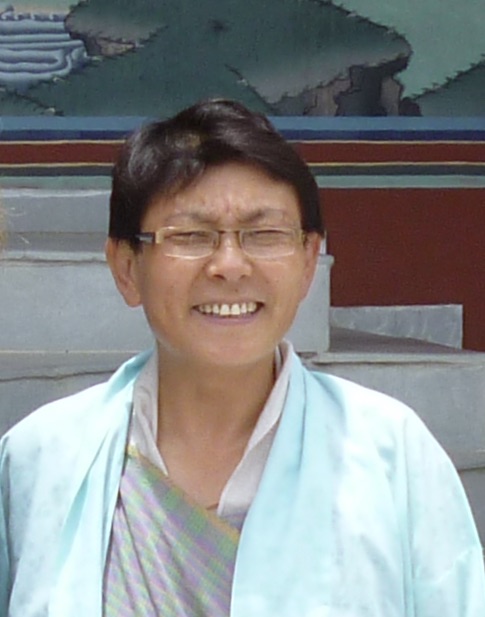
Dasho Neten Zangmo (born 23 September 1961) is a Bhutanese government official, educator, and politician who served as the founding chairperson of the Anti-Corruption Commission (ACC) of Bhutan from 4 January 2006 to 2016. Appointed directly by His Majesty King Jigme Singye Wangchuck, she led one of Bhutan's most important constitutional bodies during its formative decade, earning a reputation for fearless and impartial enforcement of anti-corruption laws against individuals at every level of government and society.[1]
Before her appointment to the ACC, Zangmo had a distinguished career in education, technical training, and senior civil service administration, including serving as secretary in the Cabinet Secretariat and secretary in the Ministry of Foreign Affairs. After stepping down from the ACC, she entered politics as president of the Bhutan Kuen-Nyam Party (BKP) in 2017, becoming one of Bhutan's first female political party leaders. The party's failure to advance past the primary round of the 2018 elections led to her resignation from party leadership.[1]
Early Life and Education
Zangmo was born on 23 September 1961 in Bumthang, in central Bhutan. She received her education at Sherubtse Public School in Trashigang, one of the country's oldest and most respected educational institutions. She entered government service in 1985 as a National Service Trainee and built her career through progressively senior positions in the Bhutanese public sector.[1]
Career in Education and Administration
Zangmo's early career was rooted in technical education and institutional leadership. Between 1986 and 1989, she served as vice-principal of the Royal Bhutan Polytechnic in Deothang, and from 1990 to 1992 as its principal. In October 1990, she moved to the Rinchending Technical Institute in Phuentsholing, serving as principal until 1995. Her work in these institutions was vital to Bhutan's efforts to develop a skilled technical workforce during a period of rapid infrastructure development.[1]
In 1996, Zangmo transitioned from education to central government planning, becoming Director of the Planning Commission, a post she held until 1999. She then served as secretary in the Cabinet Secretariat from 1999 to 2003, and as secretary in the Ministry of Foreign Affairs from 2003 to 2006. These roles placed her at the center of Bhutanese governance during the critical years leading up to the country's democratic transition, giving her deep insight into the workings of government and the vulnerabilities to corruption that attend rapid development.[1]
Chairperson of the Anti-Corruption Commission (2006–2016)
On 4 January 2006, King Jigme Singye Wangchuck appointed Zangmo as the founding chairperson of the Anti-Corruption Commission of Bhutan. The ACC was established as an autonomous constitutional body under the Constitution of Bhutan, tasked with preventing and combating corruption in both the public and private sectors. Its creation was part of the broader institutional reforms that accompanied Bhutan's transition from absolute monarchy to constitutional monarchy.[1]
Under Zangmo's leadership, the ACC established its investigative processes, developed public education campaigns, and built an institutional culture of independence and rigorous enforcement. She earned the title of Dasho — one of Bhutan's highest honors, typically conferred by the King — in 2009, in recognition of her service. Her tenure was characterized by a willingness to pursue cases against high-profile individuals, including senior government officials and business figures, a posture that earned her both admiration and controversy.[2]
Anti-Corruption Strategy
Zangmo's approach to fighting corruption combined investigation and prosecution with prevention and public education. She advocated for transparency in government procurement, strengthened financial disclosure requirements for public officials, and promoted whistleblower protections. She frequently spoke publicly about the corrosive effects of corruption on Bhutan's development and on the Gross National Happiness philosophy, arguing that corruption undermines the trust between citizens and government that is essential to the GNH framework.[2]
Her work at the ACC received international recognition, including acknowledgment from the United Nations Millennium Development Goals campaign, which identified her as one of the rare individuals globally who had made the MDGs real in her work. She was praised for devoting her career to fighting corruption in government systems, private business, and public life.[3]
Political Career: Bhutan Kuen-Nyam Party
After completing her tenure at the ACC, Zangmo entered electoral politics. On 29 May 2017, she became president of the Bhutan Kuen-Nyam Party (BKP), a newly formed political party. Her decision to lead a political party marked a significant transition from the nonpartisan role of the ACC to the partisan arena of democratic politics.[1]
The BKP competed in the primary round of the 2018 general elections but failed to qualify as one of the two parties advancing to the general election — Bhutan's electoral system uses a two-round process in which only the top two parties from a primary round proceed to the final vote. The BKP's elimination was announced on 15 September 2018, and Zangmo resigned as party president the following day. The party, however, took nearly two years to formally accept her resignation, requesting that she reconsider.[4]
Legacy
Neten Zangmo's legacy rests primarily on her foundational work at the Anti-Corruption Commission, where she established the institutional infrastructure, investigative culture, and public credibility that continue to define Bhutan's anti-corruption framework. As one of the most prominent women in Bhutanese public life, alongside figures such as Dorji Choden, she demonstrated that women could exercise authority and command respect at the highest levels of Bhutanese governance.
References
Related articles
Know something about this topic? Edit this article or . Anonymous contributions welcome — no account required.