Karma Phuntsho
From BhutanWiki, the people's encyclopedia of Bhutan · people · Verified
This article is about a living or recently deceased person. Edits must be supported by reliable, verifiable sources. Unsupported or potentially defamatory content will be removed.
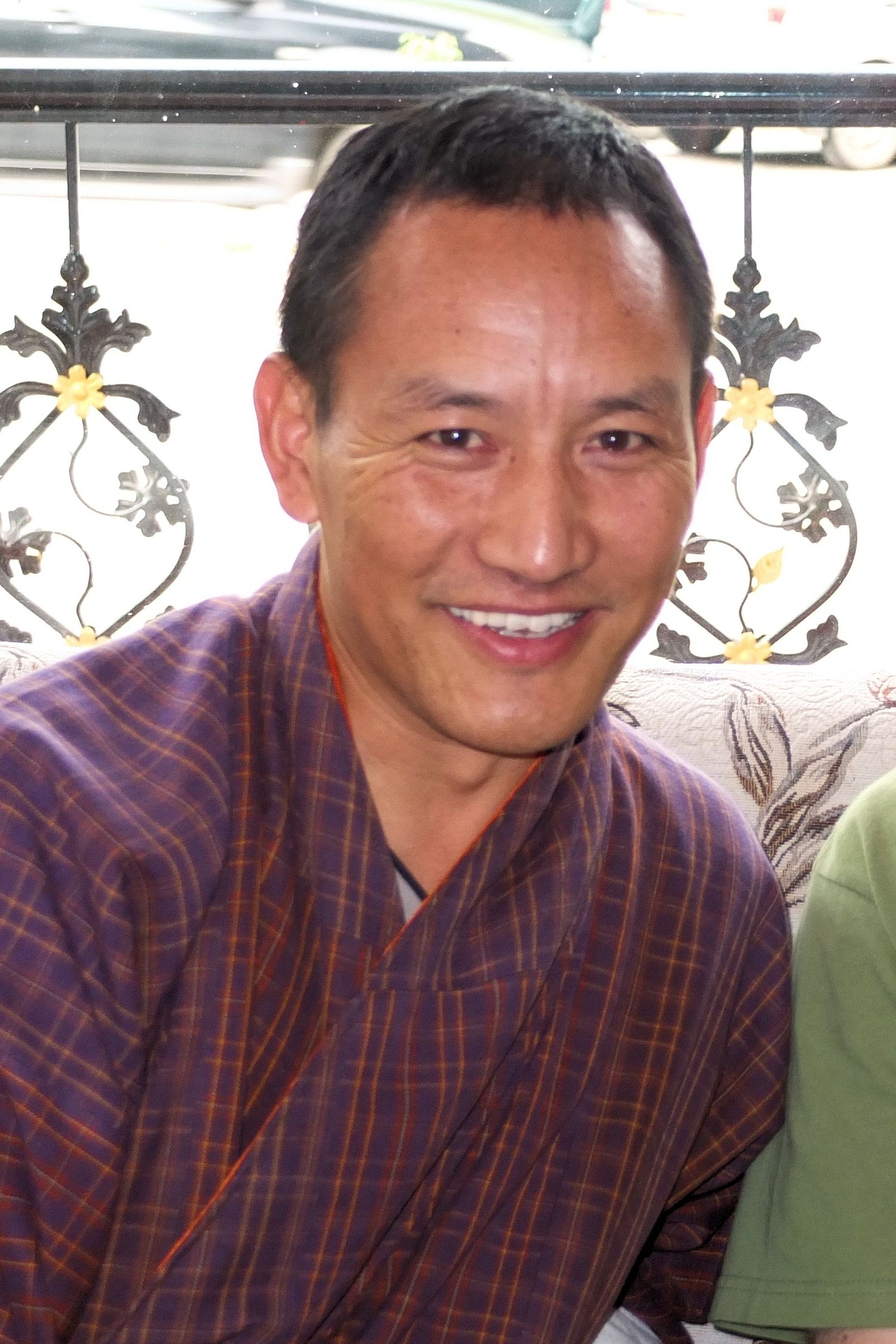
Lopon Dr. Karma Phuntsho (born 1968) is a Bhutanese scholar, social entrepreneur, and cultural preservationist whose work spans Buddhist philosophy, Bhutanese history, and grassroots development. He is the author of The History of Bhutan (2013), the most comprehensive single-volume history of the country ever written, and the founder of the Loden Foundation, a pioneering educational charity that has transformed the landscape of social entrepreneurship and cultural preservation in Bhutan.[1]
Phuntsho holds a D.Phil. in Oriental Studies from the University of Oxford, where he studied at Balliol College, and is one of the few scholars who combines deep training in both traditional Buddhist monastic education and modern Western academia. His academic work on Mipham's dialectics and Madhyamaka philosophy has been published by Routledge, while his popular writing and public advocacy address issues of education, cultural preservation, and social development in Bhutan.[2]
On 16 November 2024, Karma Phuntsho became the first Bhutanese citizen in the 66-year history of the Ramon Magsaysay Award to receive what is often called "Asia's Nobel Prize," in recognition of his transformative contributions to education, entrepreneurship, and cultural heritage preservation.[3]
Early Life and Education
Karma Phuntsho was born in Bhutan in 1968. He received traditional Buddhist monastic education before pursuing modern academic studies. In 1997, he joined Balliol College, University of Oxford, to read for an M.St. in Sanskrit and Classical Indian Religions. He continued at Oxford, completing a D.Phil. in Buddhist Studies in 2003 with a dissertation on the dialectics of the great Nyingma scholar Mipham Rinpoche.[2]
This dual formation — in the contemplative, textual traditions of Tibetan Buddhism and in the critical methodologies of Western scholarship — gave Phuntsho a distinctive intellectual perspective. He holds the traditional Bhutanese scholarly title of Lopon (master teacher), reflecting his standing within the monastic intellectual tradition.
The History of Bhutan
Phuntsho's magnum opus, The History of Bhutan, was published by Random House India in 2013. The book provides a comprehensive account of Bhutanese history from the earliest archaeological evidence through to the country's transition to democracy in 2008. Drawing on both classical Bhutanese texts (many previously untranslated) and modern historiographical methods, the work fills a major gap in the scholarly literature on the Himalayan region.[1]
The book received the Choice Outstanding Academic Title Award in 2015, a distinction awarded by the American Library Association to the most significant academic titles published each year. It remains the standard reference work on Bhutanese history for scholars, students, and general readers alike.[4]
The Loden Foundation
In 1999, while still a graduate student at Oxford, Phuntsho founded the Loden Foundation, an educational charity committed to promoting education, nurturing social entrepreneurship, and documenting Bhutan's cultural heritage. The name "Loden" derives from the Buddhist concept of intellectual wisdom, and the foundation's work reflects Phuntsho's conviction that sustainable development must be rooted in both education and cultural understanding.[5]
Entrepreneurship Programs
The Loden Foundation pioneered social entrepreneurship support in Bhutan. Since 2008, it has funded 295 entrepreneurs (including 97 women), created 860 jobs, and provided training to 5,750 aspiring entrepreneurs. The foundation provides startup funding, mentorship, and business training to Bhutanese citizens who might otherwise lack access to capital and expertise, with a particular focus on rural communities and women.[3]
Cultural Heritage Preservation
The foundation has undertaken an ambitious program of cultural documentation and preservation. Its accomplishments include documenting 3,348 hours of intangible cultural heritage (oral traditions, rituals, performing arts), digitizing 4.55 million pages of classical Bhutanese texts, capturing 150,000 images of art and artifacts, and supporting sixty-one cultural projects across the country. This work is critical in a nation undergoing rapid modernization, where traditional knowledge and practices are at risk of being lost within a generation.[3]
Academic Publications
Phuntsho's scholarly publications include Mipham's Dialectics and the Debates on Emptiness: To Be, Not to Be or Neither (Routledge, 2005), a rigorous study of Madhyamaka philosophy as interpreted by the influential 19th-century Nyingma scholar Ju Mipham. He has published extensively in academic journals on topics including Bhutanese history, Buddhist philosophy, religion, and culture, and serves as a research associate at the Oxford Centre for Buddhist Studies.[2]
Ramon Magsaysay Award (2024)
On 16 November 2024, Karma Phuntsho was awarded the Ramon Magsaysay Award in Manila, Philippines. The award citation recognized him for "his multifaceted leadership in preparing Bhutan for the future while safeguarding its past." He became the first Bhutanese recipient of the award in its 66-year history, placing him alongside previous laureates including Mother Teresa, the Dalai Lama, and Vinoba Bhave.[3]
The Magsaysay Award recognized the breadth and integration of Phuntsho's work: as a scholar who has made Bhutanese history accessible, as a social entrepreneur who has created economic opportunities for hundreds of Bhutanese, and as a cultural preservationist who has documented an irreplaceable heritage. Kuensel, Bhutan's national newspaper, described the honor as Bhutan's scholar winning "the Nobel Prize of Asia."[6]
Public Engagement
In addition to his academic and institutional work, Phuntsho is an active public intellectual. He regularly writes and speaks in national media and on social media on issues of social and cultural significance, and he has become one of the most recognizable voices in contemporary Bhutanese public discourse. His willingness to engage with difficult questions about Bhutan's future — including the tensions between modernization and cultural preservation — has made him a respected figure across generations.
References
- "Karma Phuntsho." Wikipedia.
- "Biography." Lopen Karma Phuntsho Official Website.
- "Phuntsho, Karma." The Ramon Magsaysay Award Foundation.
- "Alumnus awarded for transformative contributions to Bhutan's future." Balliol College, Oxford.
- "Celebrating Excellence: Lopon Dr. Karma Phuntsho Receives the Ramon Magsaysay Award 2024." Loden Foundation.
- "Dr Karma Phuntsho wins the Nobel Prize of Asia." Kuensel Online.
Related articles
Know something about this topic? Edit this article or . Anonymous contributions welcome — no account required.