Bhutan National Football Team
From BhutanWiki, the people's encyclopedia of Bhutan · culture · Verified

The Bhutan national football team represents the Kingdom of Bhutan in international men's association football competition. Governed by the Bhutan Football Federation (BFF), which is affiliated with both FIFA and the Asian Football Confederation (AFC), the team has been a consistent presence near the bottom of the FIFA World Rankings since the rankings system was established. Despite its modest competitive record, the Bhutan national team holds a unique place in world football history, primarily through the celebrated 2002 documentary The Other Final, and has become a symbol of sporting spirit and the joy of participation regardless of results.[1]
Football is the most popular sport in Bhutan after archery, the national sport. The national team's development reflects the broader trajectory of modern sports in a country that was largely isolated from the international sporting community until the late twentieth century. While resources and infrastructure remain limited compared to regional competitors, the growth of football in Bhutan has been supported by government investment, FIFA development programmes, and growing public enthusiasm.[2]
History
Organised football in Bhutan dates to the 1980s, though informal games were played earlier, introduced through contact with Indian military personnel and educators. The Bhutan Football Federation was established in 1983 and gained FIFA membership in 2000, relatively late compared to most Asian nations. Prior to FIFA affiliation, Bhutan's participation in international football was extremely limited.
The team played its first officially recognised FIFA international match on 12 April 2000, losing 6-0 to Kuwait in a 2002 FIFA World Cup qualifying match. Early results were heavily lopsided, reflecting the vast gap in resources, training, and experience between Bhutan and established Asian football nations. Nevertheless, participation in World Cup and Asian Cup qualifying campaigns provided invaluable competitive experience and raised the profile of football within the country.
The Other Final
The event that brought the Bhutan national team to global attention was "The Other Final", a match organised on 30 June 2002 — the same day as the 2002 FIFA World Cup Final between Brazil and Germany. Dutch filmmaker Johan Kramer conceived the idea of staging a match between the two lowest-ranked teams in the FIFA rankings at the time: Bhutan (ranked 202nd) and Montserrat (ranked 203rd). The match was played at Changlimithang Stadium in Thimphu before a crowd of approximately 15,000 spectators, and Bhutan won 4-0.[3]
The event was documented in Kramer's film "The Other Final," which became an acclaimed documentary exploring themes of sportsmanship, cultural exchange, and the universal love of football. The film brought unprecedented international media attention to Bhutan and its football programme, transforming the team from an obscure footnote in world football into a beloved underdog story. The match is still celebrated in Bhutan as a landmark sporting and cultural event.
Changlimithang Stadium
The Bhutan national team plays its home matches at Changlimithang Stadium in Thimphu, the country's primary sporting venue. The stadium has a capacity of approximately 25,000 and is situated in the historic Changlimithang ground, which has been a site of archery competitions and public gatherings for centuries. The venue also hosted the coronation celebrations of the Fifth King, Jigme Khesar Namgyel Wangchuck, in 2008.
The stadium underwent significant renovation and upgrading with FIFA development funds in the early 2000s. At an altitude of approximately 2,320 metres above sea level, Changlimithang provides a notable home advantage in terms of altitude, as visiting teams from lower elevations may struggle with the thinner air. The stadium's dramatic Himalayan backdrop has made it one of the most photographed football venues in Asia.
Notable Matches and Results
While victories have been infrequent in major qualifying competitions, the Bhutan national team has achieved several notable results beyond "The Other Final":
In the 2018 FIFA World Cup qualifying preliminary round, Bhutan defeated Sri Lanka 3-1 on aggregate in a two-legged tie, marking the team's first-ever victory in World Cup qualifying. The first leg in Colombo ended 1-0 to Bhutan, and the second leg in Thimphu finished 2-1 to Bhutan, sparking celebrations across the country. Bhutan was subsequently eliminated in the next round by China.
In South Asian Football Federation (SAFF) Championship tournaments, Bhutan has competed regularly since 1993, though without progressing beyond the group stage. The team has recorded victories against fellow South Asian minnows including Sri Lanka and the Maldives in various friendly and qualifying matches.
In the 2019 SAFF Championship qualifying round, and in AFC Asian Cup qualifying, the team has continued to gain experience despite rarely advancing. Each qualifying campaign provides the players with competitive matches against stronger opposition, contributing to gradual improvement.
FIFA Rankings
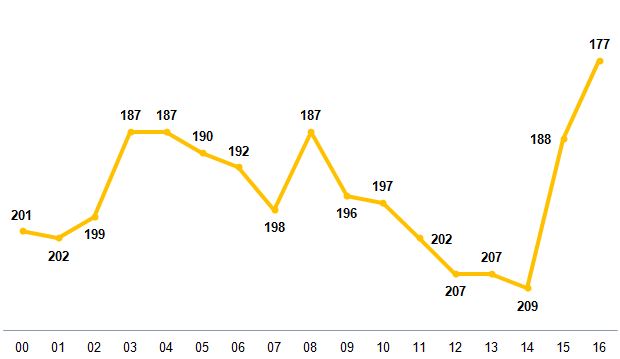
Bhutan's FIFA ranking has fluctuated considerably, typically ranging between 180th and 210th. The team's highest recorded ranking was 163rd, achieved in 2015 following the World Cup qualifying victory over Sri Lanka. While rankings near the bottom of the FIFA table might seem discouraging, they reflect the genuine constraints of population size, resources, and footballing tradition rather than a lack of effort or enthusiasm. For context, Bhutan's population of approximately 780,000 is smaller than that of many individual cities that field professional football clubs.[1]
Development Programmes
The Bhutan Football Federation has implemented several programmes to develop football at all levels. A national youth development programme identifies talented young players and provides structured coaching. School football competitions are organised across the country, and the BFF runs coaching courses to improve the quality of football instruction at grassroots level.
FIFA's Forward Programme has provided financial and technical support to the BFF, funding coach education, youth development, women's football programmes, and infrastructure improvements. The AFC has also provided development assistance, including coaching workshops and administrative capacity building. Some Bhutanese players have received training opportunities abroad, primarily in India, Thailand, and Japan.
Women's Football
Women's football in Bhutan is in its early stages of development. The Bhutan women's national team was established in the 2000s and has participated in a limited number of international matches, primarily in SAFF women's competitions. Cultural barriers and limited resources have constrained the growth of women's football, but the BFF has identified it as a priority area for development, and participation among girls and women is gradually increasing.
Domestic Football
The Bhutan Premier League, the country's top domestic football competition, was established in 2012 and features clubs from across the country. The league has grown in organisation and competitiveness, providing a regular competitive structure for Bhutanese players. Before the establishment of the Premier League, domestic football was organised through ad hoc tournaments and inter-district competitions.
References
Related articles
Know something about this topic? Edit this article or . Anonymous contributions welcome — no account required.