culture
Chugo
Chugo is a traditional dried cheese made from the milk of yaks, dzo, or cows, produced in the high-altitude districts of Bhutan and consumed across the country as a nutritious snack. It is among the hardest cheeses in the world and has been valued as both food and trade currency in highland communities.
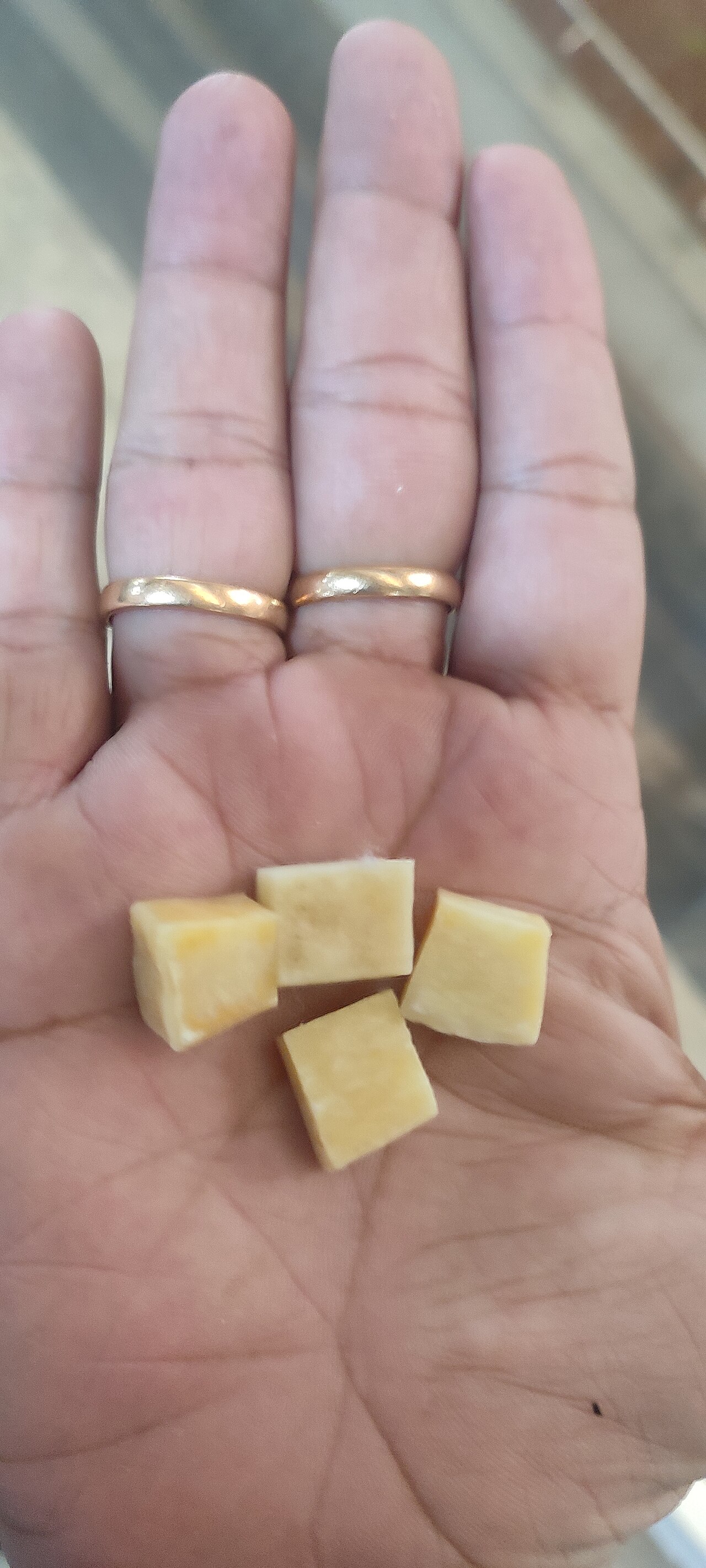

Chugo (also written chogo or chogo; known as chhurpi in Nepal) is a traditional dried cheese produced by highland communities across Bhutan, Nepal, Tibet, and parts of northeastern India. Made from the milk of yaks, dzo (yak-cattle hybrids), or cows, it is most characteristic of Bhutan's high-altitude northern districts, where yak herding remains a way of life. Chugo is widely acknowledged as one of the hardest cheeses in the world — so dense that a single piece may be chewed for thirty minutes or more without dissolving, much like a prolonged piece of chewing gum. Its durability without refrigeration and its concentrated nutritional value made it an essential food and, historically, a medium of exchange across mountain trade routes.
Production
Chugo production begins with fresh yak or cow milk. The milk is left to ferment and acidify, after which it is heated and stirred in a bronze or iron pot until the solids coagulate and separate from the whey. The resulting curds are wrapped in yak-hair cloth and pressed between flat stones to expel as much moisture as possible. Once sufficiently compressed, the firm cheese is sliced into blocks or sticks, strung on yak-hair cord, and hung to smoke over a wood fire for several days. The combination of pressing, smoking, and extended air-drying creates a product that is extraordinarily hard and shelf-stable — pieces can be stored for years in dry conditions without spoiling.
In 2022, highland yak herders in Bhutan's Dagala region produced roughly twelve metric tonnes of chugo, reflecting the continued commercial relevance of the product even as incomes from other sources such as cordyceps collection have grown. The Bhutan Foundation and other development organisations have supported skills training for yak herder communities in improving cheese quality and packaging for domestic and export markets.
Nutritional Value
Yak milk is considerably richer than standard cow's milk in fat, protein, calcium, and vitamin B12. Research conducted by scientists at the University of Guelph, Canada, found that yak cheese contains approximately three times more beneficial omega-3 fatty acids than conventional cheddar. Chugo is accordingly a dense source of protein and fat-soluble nutrients — one reason it was historically prized as a provision for long highland journeys, where compact, non-perishable food was essential. The probiotics generated during fermentation are also nutritionally valuable, supporting digestive health.
Hard chugo is consumed as a snack throughout the day. Pieces are placed in the mouth and chewed slowly over an extended period, releasing a mild, slightly sour, smoky flavour. In urban markets and roadside shops across Bhutan, chugo is sold strung in necklace-like loops from hooks or displayed in baskets — a characteristic sight in any Bhutanese market. In restaurants and home kitchens, a softer, fresher version of chugo is used as an ingredient in cooking, melted into datshi dishes or dissolved into soups.
Varieties and Trade
Chugo exists in two principal forms. Hard chugo is the iconic rock-dense product described above, dried and smoked until it becomes extremely firm. Soft chugo is a fresher, curd-like cheese with a tangy, slightly acidic flavour that is used primarily in cooking rather than eaten as a standalone snack. The soft variety is broadly analogous to Indian paneer or Nepalese chhana in texture and use.
Historically, hard chugo was sufficiently valuable and portable that it served as a commodity in barter trade between highland and lowland communities. Yak herders of the northern districts would descend to lower altitudes in winter, bringing chugo, butter, and wool to exchange for grain, metal implements, and other goods that the highlands did not produce. This vertical trade integration linked the Gasa and Bumthang highlands with the Wangdue Phodrang and Trongsa valleys across seasonal cycles.
References
View online: https://bhutanwiki.org/articles/chugo · Content licensed CC BY-SA 4.0