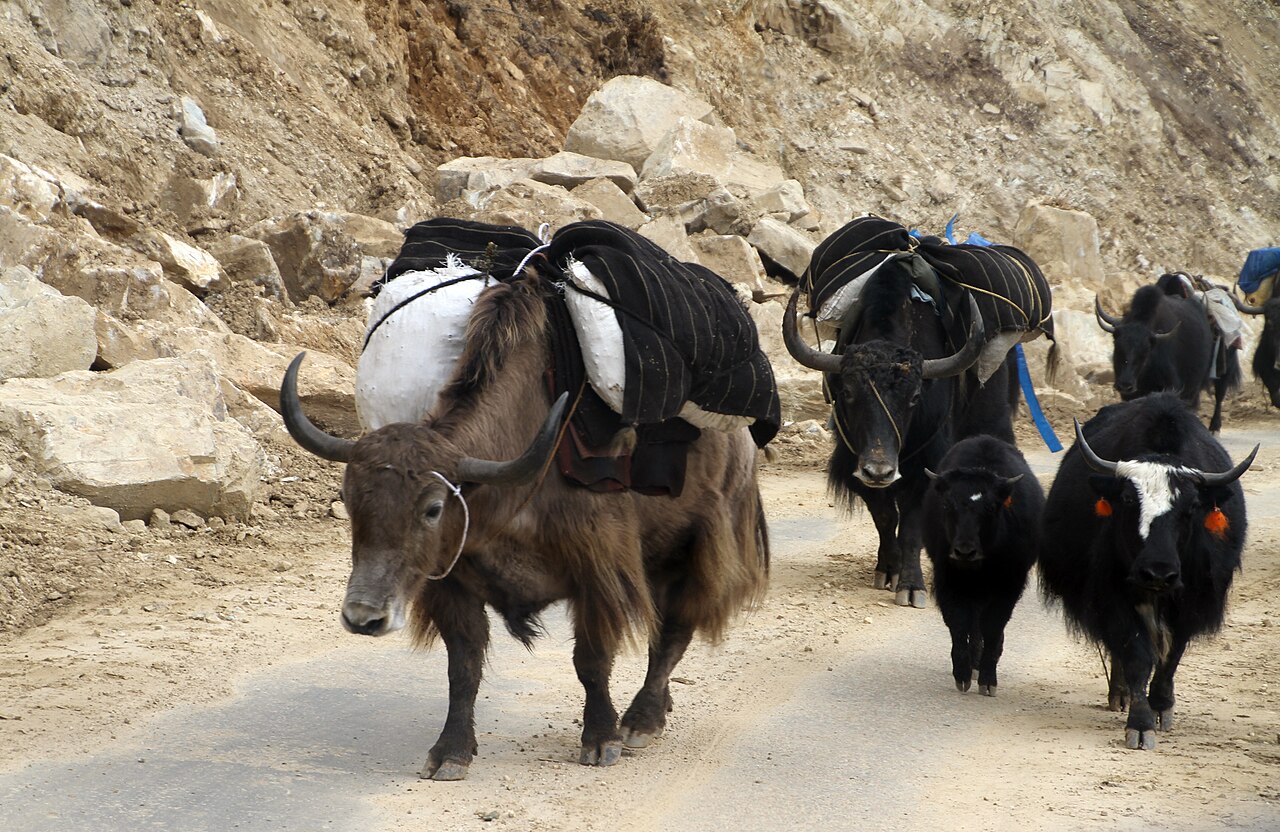

Yak herding is a centuries-old pastoral tradition practised by the highland communities of northern Bhutan, where altitudes range from 3,000 to over 5,000 metres above sea level. The domestic yak (Bos grunniens), superbly adapted to cold, high-altitude environments, is the foundation of economic and cultural life for communities such as the Layap of Laya and the Lunap of Lunana, as well as smaller pastoral groups in Merak, Sakteng, and other remote highland regions. Yaks provide milk, butter, cheese, wool, hair, and meat, and serve as indispensable pack animals along mountain trails that remain inaccessible to motor vehicles. Bhutan is home to an estimated 30,000 to 40,000 yaks, the great majority of which are managed by semi-nomadic herding families.[1]
Yak herding in Bhutan is not merely an economic activity but a way of life inseparable from the identity, culture, and spiritual practices of the highland peoples. The annual cycle of migration between summer and winter pastures structures the rhythm of community life, and yak products form the basis of highland cuisine, trade, and material culture. In recent decades, the traditional herding lifestyle has come under pressure from climate change, changing aspirations among younger generations, and the lure of opportunities in lowland towns, raising questions about the long-term viability of pastoral life in the Bhutanese highlands.[2]
The Yak and Its Importance
The yak is a large, shaggy bovid native to the Tibetan Plateau and the high Himalayas. Domesticated thousands of years ago, the yak thrives at altitudes where other livestock cannot survive, tolerating extreme cold, thin air, and sparse vegetation. In Bhutan, yaks are kept primarily above 3,000 metres, where they graze on alpine meadows and scrublands. The animal is valued for virtually every product it provides. Yak milk, richer in fat and protein than cow's milk, is churned into butter and processed into a variety of hard and soft cheeses. Yak butter is a staple of highland cuisine and is also used in butter lamps for Buddhist religious observance. Yak hair and wool are spun and woven into rope, tent fabric, blankets, and clothing. Dried yak dung serves as a primary fuel source in the treeless high-altitude zones. Yak meat, often dried into jerky for preservation, provides an essential protein source during the long winters.
In addition to their product value, yaks serve as pack animals for transporting goods across mountain passes and along trails that connect highland communities to the lowland markets. The dzos and dzomo (yak-cattle hybrids), bred by crossing yaks with lowland cattle, are valued at intermediate altitudes for their combination of yak hardiness and cattle docility and higher milk yield.
Highland Herding Communities
The Layap
The Layap are the inhabitants of Laya, a remote settlement at approximately 3,800 metres in the Gasa district of northwestern Bhutan. The Layap are among the most culturally distinctive communities in Bhutan, known for their unique dialect, traditional bamboo-cone hat worn by women, and their deep connection to yak herding. Layap women are recognised for their skill in producing yak butter and cheese, which are traded in lowland markets for rice, chillies, and other essentials. The annual Royal Highland Festival, held in Laya, celebrates the heritage of the Layap and other highland communities.[3]
The Lunap
The Lunap inhabit Lunana, one of the most remote and sparsely populated regions in Bhutan, situated at altitudes between 3,500 and 4,500 metres. The Lunap are almost entirely dependent on yak herding, supplemented by the collection of cordyceps (caterpillar fungus), a highly valued traditional medicine that fetches high prices in regional markets. The extreme isolation of Lunana -- it takes several days of trekking to reach from the nearest road -- has preserved a traditional way of life but has also made it difficult for the Lunap to access modern education, healthcare, and markets. The community has been the subject of international attention, notably through the Bhutanese film "Lunana: A Yak in the Classroom," which depicted the challenges of providing education in this remote area.[4]
Merak and Sakteng
In eastern Bhutan, the semi-nomadic Brokpa communities of Merak and Sakteng practise yak herding at high altitudes in the Trashigang district. The Brokpa are culturally and linguistically distinct from other Bhutanese communities and maintain their own traditions of dress, housing, and pastoral practice. Like the Layap and Lunap, the Brokpa face pressures from modernisation and changing economic opportunities.
Seasonal Migration Patterns
Yak herding in Bhutan follows a semi-nomadic pattern dictated by the seasonal availability of pasture. During the summer months (June to September), herders move their animals to high alpine meadows above 4,000 metres, where snowmelt feeds lush grasslands. Families often maintain temporary camps at these summer pastures, living in yak-hair tents or simple stone shelters. As autumn arrives and temperatures drop, herders gradually move their animals to lower pastures, typically between 3,000 and 3,500 metres, where they spend the winter. This seasonal migration, known locally as transhumance, requires intimate knowledge of the landscape, weather patterns, and pasture conditions accumulated over generations.
The migration cycle also structures the social and ceremonial calendar of highland communities. Summer gatherings at high pastures are occasions for socialising, trade, and the celebration of festivals. The autumn descent brings families back to their permanent settlements, where winter is spent repairing equipment, processing yak products, and engaging in religious observances.
Yak Products and Trade
Yak products form the basis of the highland economy and are traded with lowland communities in a pattern of exchange that has persisted for centuries. The most important traded products include yak butter, hard cheese (chugo), soft cheese, dried meat, and wool. Highland herders exchange these products for rice, maize, chillies, salt, and manufactured goods from the lowlands. This barter-and-trade relationship between highland and lowland communities has been a fundamental feature of Bhutanese economic life, linking the diverse ecological zones of the country into an integrated economic system.
In recent years, the collection and sale of cordyceps (yartsa gunbu) has become a major supplementary income source for yak-herding communities. Cordyceps, a parasitic fungus that grows on caterpillar larvae at high altitudes, is prized in traditional Chinese and Tibetan medicine and commands very high prices. The Bhutanese government has regulated the cordyceps harvest, allocating collection rights to highland communities and imposing seasonal restrictions to prevent over-harvesting.
Challenges and Modernisation
The yak-herding way of life faces multiple challenges in the twenty-first century. Climate change is altering highland ecosystems, with rising temperatures pushing the snowline higher, affecting water availability and pasture quality. The incidence of glacial lake outburst floods (GLOFs) has increased, posing direct threats to highland communities, particularly in Lunana, which is surrounded by glacial lakes.[5]
Rural-to-urban migration is drawing younger generations away from the herding life. The physical demands of high-altitude pastoralism, combined with the isolation and limited access to modern amenities, make the lifestyle less attractive to young people who have been exposed to urban life and formal education. Some highland communities have seen significant population decline, threatening the continuity of herding traditions and the cultural knowledge that sustains them.
The Bhutanese government and international development organisations have undertaken initiatives to support highland pastoral communities, including improved veterinary services for yak herds, the development of value-added yak products (such as premium cheese and wool products for export), and infrastructure improvements such as solar power installations and basic health clinics. The Royal Highland Festival and similar cultural events aim to celebrate and raise the profile of highland pastoral cultures. Nonetheless, the long-term sustainability of yak herding as a viable livelihood in Bhutan remains an open question, tied to broader trends in climate, economy, and social change.
References
Related articles
Know something about this topic? Edit this article or . Anonymous contributions welcome — no account required.