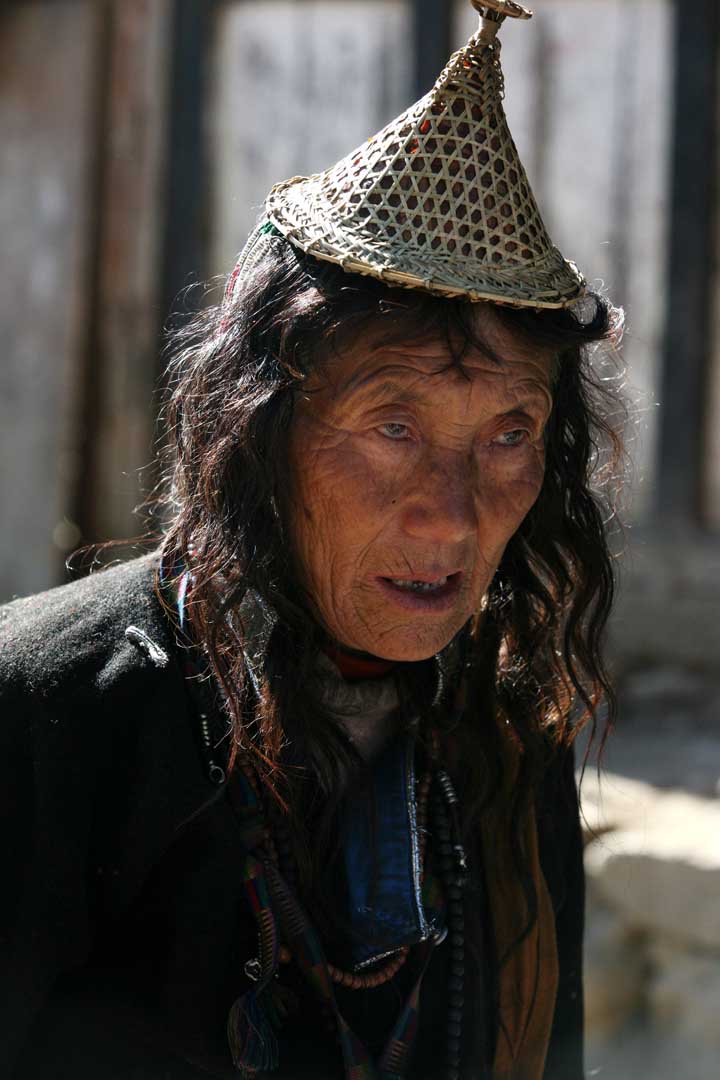

The Layap (Dzongkha: ལ་ཡག་པ་) are an indigenous semi-nomadic people inhabiting the village of Laya in Gasa District, northwestern Bhutan, at an altitude of approximately 3,850 metres (12,630 ft) beneath the Tsendagang peak. Numbering roughly 3,000 individuals, the Layap are one of the most culturally distinct highland communities in the kingdom, recognised for their conical bamboo hats (belo), black woollen garments, unique dialect, and a pastoral economy centred on yak husbandry. Their remote location near the Tibetan border has preserved traditions that have largely disappeared elsewhere in Bhutan.[1][2]
Laya is one of the highest permanently inhabited settlements in Bhutan. Access to the village traditionally required a multi-day trek from the nearest road, though infrastructure improvements in recent years have reduced the journey. The Layap practise a syncretic blend of Bon and Tibetan Buddhism, and their seasonal migrations, distinctive dress, and social customs set them apart from both the Ngalop majority of western Bhutan and other highland pastoralist groups such as the Brokpa of eastern Bhutan.[3]
Semi-Nomadic Lifestyle
The Layap divide their year between their permanent village at Laya and a network of high-altitude pastures where yaks are grazed during the warmer months. Families split their members across multiple locations: some remain in the village to tend fields and manage trade, while others accompany the herds to summer camps at elevations exceeding 4,500 metres. This transhumant pattern is dictated by the seasonal availability of grazing land and the harsh highland winters, during which livestock must be brought to lower settlements.[4]
Yaks are the foundation of Layap subsistence. They provide milk, butter, cheese, meat, wool, and hair, which are used both for household consumption and for trade with communities at lower altitudes. Yak hair is woven into tents and ropes, while yak butter is an essential commodity for barter. The Layap also keep dzo (yak-cattle hybrids), horses, and mules, the latter being essential for transport across the steep terrain of Gasa District.
The Belo and Traditional Dress
The most recognisable symbol of Layap identity is the belo, a distinctive conical hat woven from bamboo and cane, topped with a small spike or finial. The belo is worn primarily by women and serves both practical and cultural functions: it sheds rain effectively in the damp highland climate and signals Layap ethnic identity at festivals and markets. The hat has become an iconic emblem of highland Bhutan and features prominently in tourism literature and national cultural celebrations.[2]
Women wear ankle-length black woollen jackets over a woven blouse, adorned with silver brooches and ornaments. Men traditionally wear the standard Bhutanese gho, though in saffron and red tones distinct from the lowland styles. Both men and women wear yak-leather boots suited to the rocky highland terrain. The production of textiles is a central domestic activity, with women spinning yak wool and weaving cloth during the winter months when outdoor labour is limited.
Language and Religion
The Layap speak Layakha, a Tibeto-Burman language that is mutually unintelligible with Dzongkha, the national language. Layakha has no written script and is transmitted entirely through oral tradition. The language is classified as vulnerable due to the increasing influence of Dzongkha-medium education and media exposure among younger generations.[1]
Religious practice among the Layap blends Tibetan Buddhist observance with older Bon traditions. Homes contain Buddhist altars, and monks are consulted for auspicious dates and healing rituals. At the same time, the Layap maintain a strong relationship with local territorial deities (yul lha) and mountain spirits, conducting propitiation ceremonies to ensure the welfare of their herds and the fertility of their land.
Polyandry and Social Organisation
The Layap historically practised fraternal polyandry, in which two or more brothers share a single wife. This arrangement served to keep family landholdings and livestock intact, preventing the division of scarce resources across multiple households in a harsh environment. Each husband assumed distinct roles within the household: one might tend the yak herds at high pastures while another managed trade with lowland communities.[5]
The practice has declined sharply since the early 2000s. The legalisation of cordyceps collection in 2004 brought unprecedented cash income to Layap households, reducing the economic rationale for polyandrous arrangements. Each household may earn between Nu 50,000 and Nu 1,000,000 annually from cordyceps harvesting, depending on the number of collectors. This new wealth, combined with exposure to lowland social norms through education and media, has prompted most women to settle for monogamous marriages.[6]
Cordyceps and Economic Change
The collection and sale of cordyceps sinensis (known locally as yartsa gunbu), a parasitic fungus prized in traditional Chinese medicine, has transformed the Layap economy. Before legalisation, the Layap subsistence economy depended almost entirely on yak products and barter. The cordyceps trade has introduced cash incomes, mobile phones, televisions, and modern building materials to a community that was largely cashless a generation ago. Many Layap families now have permanent houses with modern amenities alongside their traditional yak-hair tents.[6]
This economic shift has also accelerated social change. Younger Layap increasingly pursue education in lowland towns, and some have entered government service or private employment in Thimphu. The community faces the challenge of maintaining its distinctive cultural identity while participating in Bhutan's modernising economy.
Royal Highland Festival
Since 2016, Laya has hosted the annual Royal Highland Festival, initiated under the vision of His Majesty the King. The festival celebrates highland culture through yak beauty contests, traditional songs and dances, displays of local produce, and competitions involving highland animals. It has become a significant event for promoting Layap heritage and attracting national and international attention to the community's distinctive way of life.[7]
References
- "Layap." Wikipedia.
- "Bhutan's Indigenous Layap: Royal Highland Festival, the Vanishing Polyandry and Bamboo Hat Culture." Gandhanra Art.
- "Minorities and Small Indigenous Ethnic Groups in Bhutan." Facts and Details.
- "Setting the Mountain Ablaze? The Royal Highland Festival in Bhutan from the Semi-Nomads' Perspective." Pastoralism, 2021.
- "One Woman, Multiple Husbands and the Vanishing Practice of Polyandry in Bhutan." Daily Bhutan.
- "Layaps Have Come a Long Way." Kuensel.
- "Royal Highland Festival." Gasa Dzongkhag Administration.
Related articles
Know something about this topic? Edit this article or . Anonymous contributions welcome — no account required.