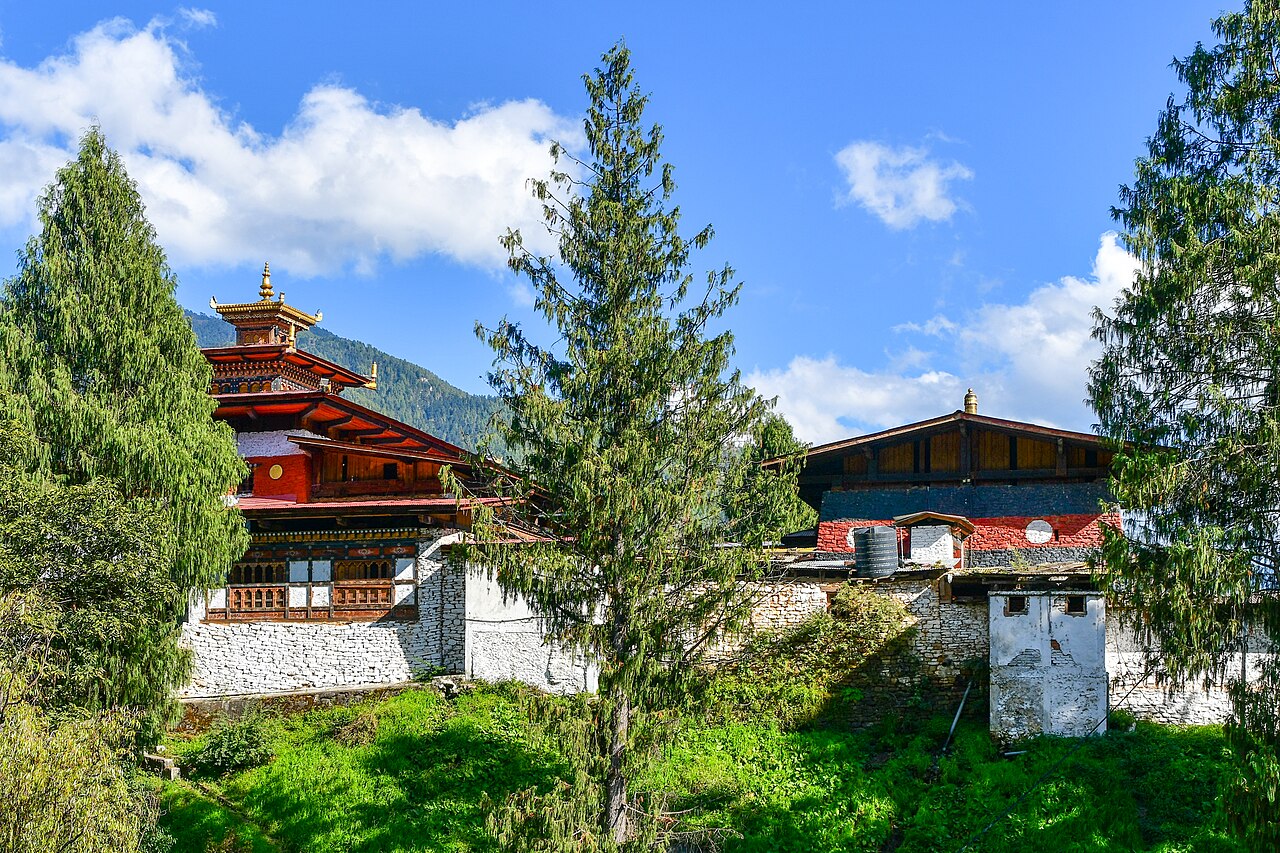

Changangkha Lhakhang is one of the oldest temples in Thimphu, the capital of Bhutan, dating to the twelfth century. Built on a prominent ridge overlooking the Thimphu valley, it was founded by Phajo Drugom Zhigpo (1184–1251), the Tibetan saint who introduced the Drukpa Kagyu school of Buddhism to western Bhutan and whose descendants continue to play a role in the country's religious life. The temple is dedicated to Chenresig (Avalokiteshvara), the bodhisattva of compassion, whose eleven-headed, thousand-armed form is the principal image within the shrine.[1]
Changangkha Lhakhang holds a special place in the lives of Thimphu's residents as the traditional temple where parents bring newborn children to receive blessings and to be given auspicious names by the presiding monks. This naming tradition, deeply woven into Bhutanese family life, makes Changangkha one of the most personally significant religious sites in the capital. On any given day, the temple receives a steady stream of families carrying infants, as well as elderly devotees performing circumambulation and students stopping to pray before school.[2]
History
The founding of Changangkha Lhakhang is attributed to Phajo Drugom Zhigpo, who arrived in Bhutan from Tibet in the early thirteenth century as a missionary of the Drukpa Kagyu lineage. According to tradition, Phajo was guided by a divine prophecy to travel south from Tibet to spread the Drukpa teachings in the valleys of western Bhutan. He established several temples and religious sites in the Thimphu and Paro valleys, of which Changangkha is among the most important survivors. The temple was built at a site chosen for its commanding view of the valley, which was believed to have geomantic significance in protecting the valley's inhabitants.[3]
Over the centuries, Changangkha has been renovated and expanded multiple times, though it retains its essential character as a modest, intimate temple rather than a monumental structure. The temple's importance grew as Thimphu developed from a small valley settlement into the national capital in 1961. Unlike many of Bhutan's more famous religious sites, which are associated with state ceremonies and monastic institutions, Changangkha has always been primarily a community temple, serving the daily devotional needs of local families.[4]
Architecture and Features
Changangkha Lhakhang is built in the traditional Bhutanese style, with whitewashed stone walls, a multi-tiered roof with gilded finials, and ornately painted wooden window frames. The temple compound is approached by a short uphill walk from the road, passing through a gate adorned with prayer wheels. The main prayer hall houses the central image of the eleven-headed, thousand-armed Chenresig, flanked by images of other Buddhist deities and protectors. The walls are covered with traditional Buddhist murals depicting scenes from the life of the Buddha, the Jataka tales, and the lives of important lineage masters.[5]
The temple courtyard offers panoramic views of central Thimphu and the surrounding mountains. A large prayer wheel enclosure stands in the courtyard, and the perimeter of the compound is lined with smaller prayer wheels that devotees spin as they circumambulate the temple. The temple grounds also include several old cypress and juniper trees, adding to the sense of antiquity and serenity that distinguishes Changangkha from the busier, more commercial areas of the modern capital below.
Naming Ceremonies and Blessings
The most distinctive tradition associated with Changangkha Lhakhang is the practice of bringing newborn children to receive blessings and names. In Bhutanese culture, it is customary for parents to consult a monk or astrologer shortly after a child's birth to determine an auspicious name based on the child's birth date and the alignment of the stars. Changangkha is the preferred temple for this purpose in Thimphu, and the presiding lama or a senior monk performs a brief ceremony, offering prayers and divining an appropriate name for the child. The name is typically written on a slip of paper and presented to the parents along with a blessed cord (sungkhor) tied around the child's neck for protection.[6]
This naming tradition reinforces the temple's role as a cradle-to-grave spiritual institution in the community. Many Thimphu residents who received their names at Changangkha return to the temple throughout their lives for prayers, offerings, and blessings during important milestones, creating a personal bond with the temple that spans generations.
Contemporary Significance
Today, Changangkha Lhakhang remains one of the most actively used temples in Thimphu. It is staffed by a small community of monks who maintain the temple, perform daily rituals, and attend to the devotional needs of visitors. The temple is also a popular site for tourists, who are drawn by its historical significance, its elevated views of the capital, and the opportunity to witness the naming ceremonies and daily worship that continue unbroken from the temple's medieval origins. Despite the rapid modernisation and urbanisation of Thimphu, Changangkha endures as a living link between the city's Buddhist past and its contemporary identity.[7]
References
Related articles
Know something about this topic? Edit this article or . Anonymous contributions welcome — no account required.