Black-Necked Crane Festival
From BhutanWiki, the people's encyclopedia of Bhutan · culture · Verified
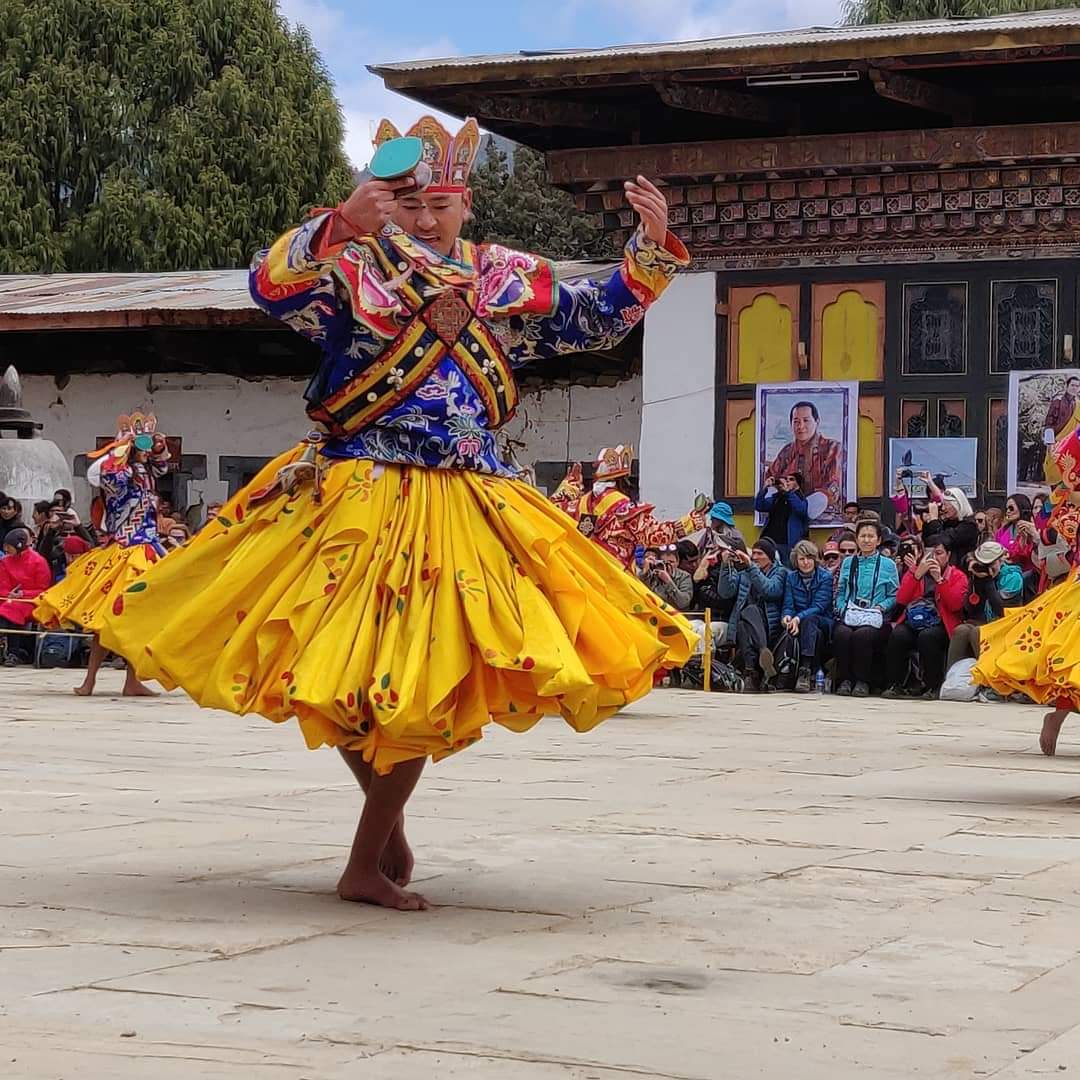

The Black-Necked Crane Festival is an annual cultural and conservation event held on 11 November in the Phobjikha (Gangtey) Valley of Wangdue Phodrang District in central Bhutan. The festival celebrates the arrival of the endangered black-necked crane (Grus nigricollis), which migrates each autumn from its breeding grounds on the Tibetan Plateau to winter in the sheltered marshlands of Phobjikha and a handful of other high-altitude valleys in Bhutan. First held in 1998, the festival was established to raise awareness about crane conservation and to foster community pride in the valley's role as a critical wintering habitat for this rare species.[1]
The black-necked crane holds a place of deep cultural and spiritual significance in Bhutan. Known in Dzongkha as thrung thrung karmo, the crane is revered in Bhutanese Buddhist tradition as an auspicious bird, associated with longevity and spiritual purity. Local lore in Phobjikha holds that the cranes circle the Gangtey Goenpa (monastery) three times upon their arrival in autumn and again before their departure in spring, a behaviour interpreted as an act of devotion to the Buddhist teachings. The annual arrival of the cranes, typically in late October or early November, is greeted with joy and reverence by the valley's residents.[2]
The festival is organised by the Royal Society for Protection of Nature (RSPN), Bhutan's leading environmental organisation, in collaboration with local schools, the Phobjikha community, and the Wangdue Phodrang district administration. It takes place in the courtyard of Gangtey Goenpa or at a nearby school, and attracts hundreds of local residents, students, monks, government officials, and an increasing number of international tourists drawn by the combination of wildlife spectacle and cultural celebration.[3]
The Black-Necked Crane in Bhutan
The black-necked crane is the only crane species that breeds and winters entirely at high altitudes, nesting on the Tibetan Plateau at elevations above 3,000 metres and wintering in valleys between 2,500 and 3,500 metres. The global population is estimated at approximately 15,000–17,000 individuals, and the species is classified as Near Threatened on the IUCN Red List. Bhutan hosts a significant wintering population: between 300 and 500 cranes arrive each year, with the majority settling in the Phobjikha Valley, the largest and most important wintering site in the country.[4]
Other wintering sites in Bhutan include the Bumdeling Valley in Trashi Yangtse District and, in smaller numbers, valleys in Bumthang and Trongsa. The cranes typically arrive in late October and depart in February or March. During the winter months, they feed on waste grain in harvested fields, tubers, and invertebrates in the marshy wetlands of the valley floor. The Phobjikha Valley's broad, flat glacial basin at approximately 2,900 metres elevation provides ideal habitat: open wetlands for feeding and roosting, surrounded by gentle slopes with scattered settlements.[5]
Conservation Challenges
The conservation of the black-necked crane in Bhutan faces several challenges. Development pressures in the Phobjikha Valley, including road construction, powerline installation, and the expansion of tourist infrastructure, threaten the wetland habitat on which the cranes depend. Powerlines pose a direct mortality risk, as cranes can collide with the wires during their low-altitude flights to and from roosting sites. In response, the Bhutanese government made the decision to bury power cables underground in key sections of the valley — a costly measure that reflects the high priority placed on crane conservation.[6]
Agricultural change also poses risks. As traditional farming practices give way to more intensive methods or as fields are converted to other uses, the availability of waste grain — an important food source for wintering cranes — may decline. Climate change represents a longer-term threat, potentially altering the timing of migration, the extent of wetland habitats, and the availability of food resources at both breeding and wintering sites.
The Festival Programme
The Black-Necked Crane Festival is a day-long event that combines traditional Bhutanese performance arts with environmental education and community celebration. The programme typically begins with opening speeches by government officials, RSPN representatives, and local leaders, followed by a sequence of performances and activities.
A highlight of the festival is the crane dance, performed by schoolchildren wearing handmade crane costumes and masks. The children mimic the elegant movements of the black-necked crane — its distinctive bowing, leaping courtship display, and graceful flight — in a performance that is both charming and educational. The crane dance has become iconic, widely photographed and reproduced in Bhutanese tourism materials.[7]
Other performances include traditional folk songs and dances by local community groups, Buddhist religious dances, and dramatic skits performed by students that illustrate conservation themes — the importance of wetland protection, the dangers of poaching, and the cultural value of the crane. Poetry recitations, art exhibitions, and essay competitions on environmental themes are also common elements of the programme.
Environmental Education
A core purpose of the festival is environmental education, particularly targeting younger generations. The RSPN uses the festival as a platform to communicate conservation messages about the black-necked crane and the broader Phobjikha Valley ecosystem. Educational displays, interactive activities, and presentations by conservationists complement the cultural performances. Schools in the valley integrate crane conservation into their curricula, and the festival serves as an annual reinforcement of these lessons.[8]
The festival has been credited with fostering a strong conservation ethic among the residents of the Phobjikha Valley. Community members have become active participants in crane monitoring programmes, reporting crane numbers and behaviour to the RSPN. The sense of pride and responsibility that the festival cultivates has contributed to a local culture of environmental stewardship that extends beyond the crane to encompass the valley's wetlands, forests, and biodiversity more generally.
Tourism and International Recognition
The Black-Necked Crane Festival has gained increasing international recognition as a model of community-based conservation celebration. It is promoted by the Tourism Council of Bhutan as part of the country's ecotourism offerings, and it attracts birdwatchers, nature photographers, and cultural tourists from around the world. The festival's timing in November coincides with the arrival of the cranes, allowing visitors to combine festival attendance with crane-watching excursions in the valley.[9]
The combination of endangered wildlife, traditional culture, stunning Himalayan scenery, and genuine community participation has made the festival a distinctive offering in Bhutan's tourism portfolio. It aligns closely with Bhutan's philosophy of Gross National Happiness, particularly the pillars of environmental conservation and cultural preservation. The festival demonstrates how conservation goals and cultural traditions can reinforce each other, creating a virtuous cycle in which ecological awareness is embedded in community identity and celebratory practice.
See also
References
- "Black-necked Crane." Wikipedia.
- "Black-necked Crane." Royal Society for the Protection of Birds.
- "Royal Society for Protection of Nature, Bhutan." RSPN.
- "Black-necked Crane." Wikipedia.
- "Royal Society for Protection of Nature, Bhutan." RSPN.
- "Royal Society for Protection of Nature, Bhutan." RSPN.
- "Guide to Bhutan's Festivals." Lonely Planet.
- "Royal Society for Protection of Nature, Bhutan." RSPN.
- "Festivals." Wikipedia.
Related articles
Know something about this topic? Edit this article or . Anonymous contributions welcome — no account required.